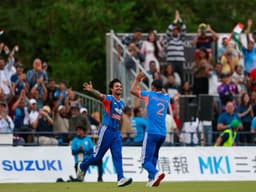
Japan hosted India in a T20I match for the Suzuki Trophy, but rain interrupted play and reduced the game to a five-over-per-side contest, which India eventually won by just two runs.
Japan’s Spinners Shock India in Powerplay
The visitors won the toss and elected to bat first at the Sano International Cricket Ground in Sano. With everyone expecting India to produce fireworks, the reality in the middle was very different. Japan’s spinners kept India under tremendous pressure, dismissing Abhishek Sharma for a golden duck, his 10th T20I duck of the year, before Sanju Samson was dismissed for a single-digit score.
Ishan Kishan’s dismissal left India reeling at 32/4 after five overs, with captain Shreyas Iyer’s 16 being the highest individual score in India’s total.
In reply, India employed a similar strategy, relying heavily on their spinners against the Japanese batters. India struck at regular intervals, while Japan struggled to time the ball on a surface that offered the bowlers considerable grip and turn.
Controversial Wide Call Adds Drama to Final Over
The match came down to eight runs needed from the final over, with Axar Patel handed the ball for India. Japan’s batters desperately searched for boundaries but struggled to make clean contact, repeatedly missing their attempted big shots.
The drama intensified on the third delivery of the over. Axar bowled down the leg side, and the delivery was called a wide. The next ball was delivered on a similar line, with the left-handed batter attempting a reverse sweep. That delivery was also initially called a wide, prompting a discussion between India captain Shreyas Iyer and the umpire.
The decision was subsequently overturned, leaving Japan needing five runs from the final three balls. However, they could not find the required runs and finished two runs short, allowing India to escape with a narrow victory after being pushed all the way by Japan.
The wide-call decision quickly became a talking point online, with some questioning whether the reversal had been influenced by the discussion between the captain and umpire. However, the decision was subsequently defended based on the ICC’s regulations concerning switch-hits and reverse sweeps.
Under the modern limited-overs playing conditions, whether a delivery is considered a wide can depend on the batter’s position and movement. If a batter changes their stance or shuffles across the crease, a delivery that might otherwise have been considered wide is not automatically called a wide if it is within the legitimate reach of the batter’s altered position or intended stroke.
Despite the controversy surrounding the call, Japan can take considerable pride in their performance. The underdogs pushed the world champions to the limit, making India work extremely hard for victory in a shortened game.
Japan Earn Global Praise for Fighting Display
Japan’s spirited display drew widespread appreciation, and their performance could prove to be an important moment for the growth of cricket in the country. If they can build on this showing, Japan could have the foundations of something special for the years ahead.