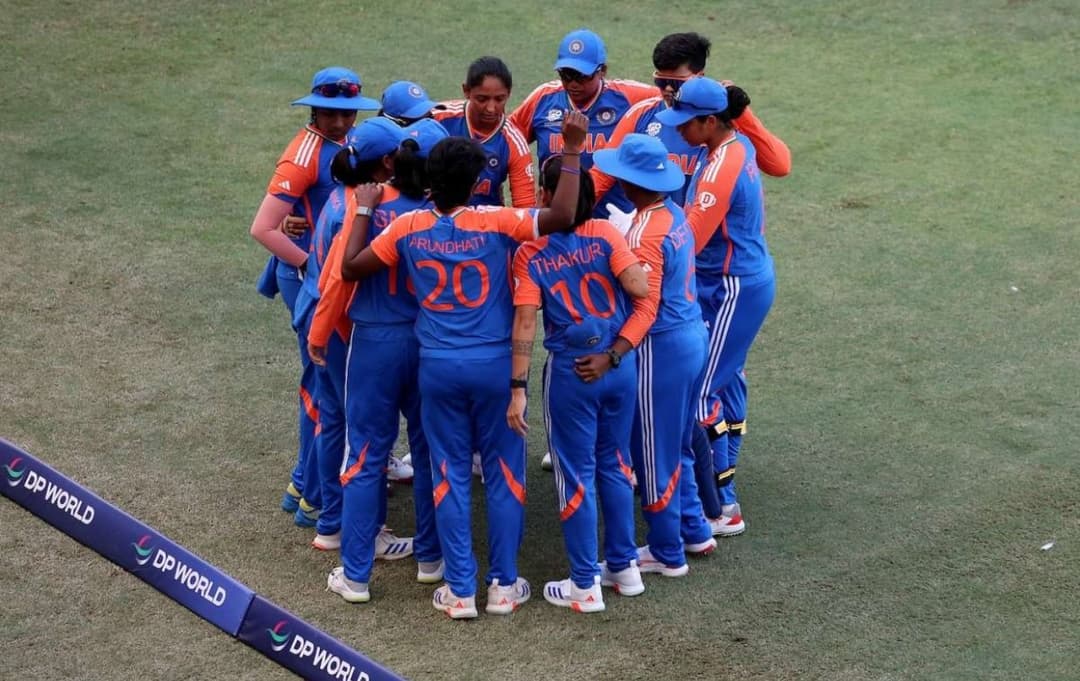
Team India entered the tournament as one of the frontrunners, alongside powerhouses like Australia, England, and South Africa, with high hopes of advancing to the knockout stages. However, their campaign did not unfold as anticipated, resulting in a failed quest for glory and an early exit during the group stage. Let’s take a closer look at their journey, reflecting on both the positives and negatives of Team India’s failed pursuit of success.
Journey
The journey to glory for the Indian women’s team was bittersweet. They entered the tournament after a disappointing loss to Sri Lanka in the Asia Cup Final. Despite being considered one of the favorites, they had a rough start with a big defeat to New Zealand. However, they bounced back with consecutive wins against Pakistan and Sri Lanka. Their qualification came down to the last game against Australia. If they had won, they would have qualified for the Knockouts due to their healthy Net Run Rate (NRR), which was better than New Zealand's. Unfortunately, they were unable to win that game. India then had to rely on the outcome of the Pakistan vs New Zealand match, hoping that New Zealand would lose. However, New Zealand won, knocking India out of yet another ICC tournament.
What Went Wrong?
Despite a few successful matches against teams like Sri Lanka and Pakistan where India used to be ahead in terms of balance and strength, their real failure lies when they are unable to push more against the Big teams like Australia and New Zealand in the Same group. This raised many questions as India is also a very equally balanced team and they can take the fight to the team as they have a lot of potential within the team. But the reason for failure is the one to discussed below and let's take a look at a few points where India failed as a whole unit.
Failure of Top Batters
Indian cricket is always known for its batting, thanks to the immense talent produced over the years. In this T20 World Cup, however, Smriti Mandhana, the Indian vice-captain, struggled significantly despite having a strong home season leading up to the tournament. Her failure at the top of the order not only created an imbalance but also placed considerable pressure on Captain Harmanpreet Kaur to manage the situation.
Smriti is a real talent and proven match-winner who can change the course of a game, particularly with her ability to tackle spinners. Typically, Shafali Verma takes on the pacers, while Mandhana handles the spinners, providing a balanced approach to the innings. Unfortunately, in this World Cup, Smriti struggled most against spin, getting dismissed by spinners three times. This raises questions about her comfort level in those matchups. While she did have one standout game where she scored a 50 against Sri Lanka, the rest of her innings did not contribute significantly to the team's overall performance.
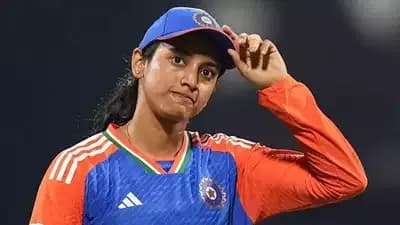
Smriti Mandhana Scores in the Group Stage Match
New Zealand | Sri Lanka | Pakistan | Australia |
12(13) | 50(38) | 7(16) | 6(12) |
Batting Order Dilemmas
At the start of the tournament, it was announced that Harmanpreet Kaur would bat at number 3 throughout. However, as the tournament progressed, she oscillated between the third and fourth positions. This shift occurred because, on slower surfaces, Jemimah Rodrigues was promoted to number 3, and she performed well in that role.
Nevertheless, having Harmanpreet at number 3 regardless of the conditions could have benefitted India significantly, especially in crucial matches against teams like Australia. When the top-order batters falter in important games, the most experienced player needs to step in, stabilize the innings, and play her natural game without the added pressure. If Harman had consistently batted at number 3 during these critical moments, she could have approached her innings with more composure.
Additionally, Jemimah's style of play is more suited to the number 4 position, as she tends to thrive in a slightly aggressive role rather than as an anchor. With the top order setting the stage, she could capitalize on the platform laid by her teammates. Consistently placing Harmanpreet at number 3 could have yielded better results for India in those vital matches.
Lack of Support in the Batting Department
Another crucial issue for India to address in the future is the lack of support for the set batter at the other end. Harmanpreet Kaur emerged as the only consistent performer throughout the World Cup, making significant contributions and scoring the most runs for India. As captain, she fought hard despite dealing with injuries, yet her efforts were often overshadowed. She was largely blamed for the loss against Australia, even though she maintained a steady approach and was actively seeking runs. However, once Deepti Sharma was dismissed, the lower middle order struggled to make any meaningful contributions.
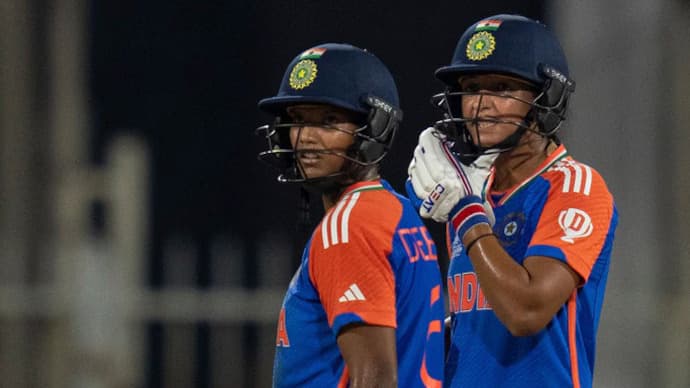
Throughout the tournament, the form of India's lower middle order was disappointing, with many players getting out for single-digit scores and failing to act as a cohesive unit in the batting department. This lack of support was especially evident during chases, where the absence of reliable contributions from the lower order made successful run-chases increasingly difficult. Addressing this imbalance will be essential for future success.
Poor Fielding
Team India boasts a strong lineup of athletes known for their dynamic and versatile fielding skills. However, during this World Cup, despite some impressive catches in the outfield, their ground fielding left much to be desired, with several dropped catches. Overall, the team's fielding did not exhibit the dynamism we’ve come to expect.
The key difference between Australia and India was evident in Australia’s ability to quickly stop easy ones and twos, creating pressure on the batters that led to crucial wickets. In contrast, India struggled to replicate this pressure, despite having some exceptional fielders. This inconsistency in fielding played a significant role in their overall performance in the tournament.
Valuable Takeaways from the Tournament
Despite a disappointing performance from the women’s team, there are several positives to take away for the future. Notably, the Indian bowling department was the only positive with the likes of Renuka Singh Thakur(7), Arundhati Reddy(7), and Asha Shobana(5) standing out throughout the tournament. This trio proved to be highly effective against opposing batters, consistently delivering strong performances. Whenever India struggled to break partnerships, these bowlers provided the crucial breakthroughs needed. This effectiveness with the ball stands as a silver lining amid the challenges faced, offering a promising foundation for the team moving forward.