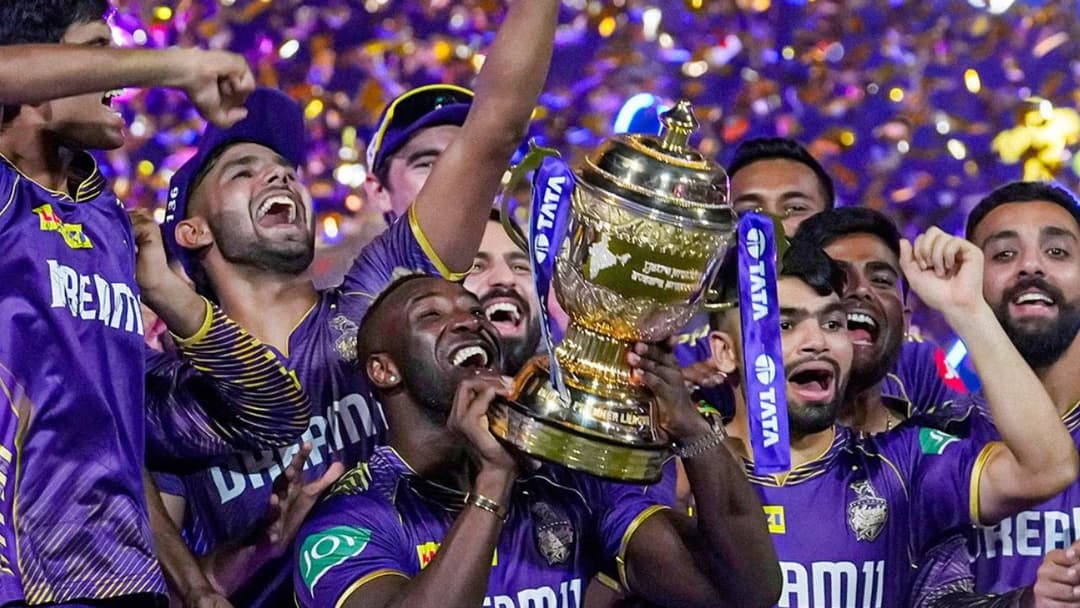
The IPL retention rules have been released, and they were eagerly anticipated by the entire cricketing community. The BCCI has introduced rules that are difficult to bypass. These rules aim to create a healthier, more balanced, and more challenging competition. The retention rules are quite different from the norm, so let's take a closer look at these new rules.
Rule Number One: Increase in Base Price
The base price is the most important factor at the auction table. Capped players can register themselves in the capped base price slot, and uncapped players are given base prices according to their experience by the committee. Previously, the base prices for capped players were 50 lakhs, 75 lakhs, 1 crore, 1.5 crore, and 2 crore. The base price of 50 lakhs has now been increased to 75 lakhs. For uncapped players, the base prices were 20, 30, and 40 lakhs, and now they have become 30, 40, and 50 lakhs, respectively. The overall purse value has increased by 20% from last year; this year it is 120 crores for each team.
Rule Number Two: Retention Slot and RTM.
Retention Slot and RTM This year, the teams can retain up to 6 players, including 2 maximum players in the uncapped slot. Pricing has been different from the previous season, and the purse amount for retention has also been increased. With the RTM card rule, if a team is retaining only 4 players, they will have a maximum of two RTM cards, and a team retaining only two players will get a maximum of 4 RTM cards. Franchises can pay players any amount they want, but if they go over a set limit, the extra money will be taken from their auction purse.
*Here is the retention slab table.
Salary slab of retained Players ( Maximum Purse: 120 Crore)
Direct Retention | Players Value (in Crores) |
Retention 1 | 18 Crore |
Retention 2 | 14 crore |
Retention 3 | 11 crore |
Retention 4 | 18 crore |
Retention 5 | 14 crore |
Uncapped Retention( 2 player max) | 4 crore |
*Uncapped players should be retained within 6 slots
Rule Number 3: Reinstate of Uncapped Player Rule
The BCCI has reinstated a key rule from the inaugural edition of the IPL, allowing players who have not played international cricket for five years to be retained as uncapped players. This rule was reintroduced by the BCCI to enable teams to retain capped players who meet this specific criterion. By bringing back this rule, the BCCI aims to provide teams with more flexibility in player retention, while also creating opportunities for players who have been out of the international circuit for an extended period.
A capped Indian player will become uncapped if he has, in the five calendar years preceding the year in which the relevant season is held, not played in the starting XI in international cricket and does not have a central contract with BCCI," the release said. "This will be applicable for Indian players only.
So under this rule, we could have many veterans get retained for 4 crores ahead of the mega auction 2025.
Rule Number 4: Overseas Check Mate
If an overseas player does not register before the mega-auction, he will not be able to register for the mini-auction. Once an overseas player has been picked up at the auction, he cannot pull out of the tournament. If he does, he will be banned from the tournament for two years, unless it is due to a medical condition. If a player misses out on the first auction and returns for the second auction, the maximum contractual pay will be 18 crore (the max retained price). If the bidding goes beyond 18 crore, the remaining amount will go to the BCCI funds, which will be used for the players that year.
In previous seasons, there was a recurring issue where marquee overseas players like Harry Brook, who pulled out of the tournament after being picked by Sunrisers Hyderabad for a staggering 13.25 crores, and Mark Wood, who withdrew to manage workload after being signed by Lucknow Super Giants for 7.5 crores, left teams in a difficult position. Other players, such as Adam Zampa and Gus Atkinson from England and Australia, were also known to pull out at the last minute, often citing personal reasons. This forced teams to scramble for replacements and adjust their strategies around the new players. This issue became a significant concern and was raised during the BCCI owners' meeting in August. To resolve this, a new rule has been introduced: no overseas player picked at the auction is permitted to withdraw from the tournament unless due to injury. If they do, they face a two-year ban, as stipulated by the regulation.
Rule Number 5: RTM Highest bidder gets another opportunity
This rule has become the most talked-about topic of the season. The main purpose of this rule's initiation was to add a new layer of strategy to the auction process. Previously, a team could bid for a player up to a certain amount, only to have another team use the Right to Match (RTM) card to match the final bid and secure the player at that price. However, the new rule introduces a significant change—now, after the bidding process reaches its peak, the last bidder has the opportunity to submit a final offer for the player. If the team holding the RTM card agrees to match this final bid, they can retain the player; if not, the player will go to the team with the highest bid.
To explain the new rule more clearly, let's use an example. Shivam Dube gets bid on by multiple teams during the auction, with Punjab Kings placing the highest bid of 7 crore. In the past, Chennai Super Kings (CSK) could have used the Right to Match (RTM) card to reclaim Dube for the same price. However, under the new rule, Punjab Kings get one final opportunity to set a new price. For instance, if Punjab fixes the final bid at 12 crore, CSK is then given the option to match the RTM for that price. If CSK agrees, they can acquire Dube for 12 crore. If not, Punjab Kings can buy him for their maximum bid of 7 crore.
This new system not only highlights a player’s true market value but also introduces a strategic element to the auction. Teams must now be more mindful of their remaining budget, plan their bids carefully, and consider the timing of their key players being auctioned.
This change from the BCCI has been widely welcomed and is set to make the auction process even more exciting, demanding sharper tactics from all teams involved.
A few other important rules:
Match Incentives
This year, the BCCI has announced that players will receive match incentives of up to 7.5 lakhs per match for those who feature in the game. Additionally, if a player participates in all the games throughout the tournament, they will be awarded a prize of 1.25 crore, as an appreciation for their high-level performance.
Impact Player Rule will Stay.
The Impact Player rule has been a revolutionary change in the IPL. There have been mixed viewpoints from players regarding this rule during the previous season. Perhaps the Impact Player rule will continue to be effective in the 2025-2027 Tournament Cycle.
Players Loan
This year BCCI bought back an old rule that the players can be loaned out to another team in the mid-season.
Injury Replacement
In the previous season, there was a rule during the tournament that allowed a team to replace a player who suffered a long-term injury and was unable to continue in the tournament. This replacement was allowed if the injured player had participated in 7 or fewer games in that season. Now, the limit for replacing injured players has been increased to 12 matches.
Teams are required to submit their final retention list by the end of October 31. The auction is expected to take place during the end of November or the first week of December in a Middle Eastern country.
This year’s IPL rules and regulations are some of the most anticipated changes in recent memory. The BCCI has put significant effort into crafting these new guidelines to ensure the competition remains balanced, exciting, and fair. These rules have raised the stakes for team management, requiring them to approach the auction with heightened strategic thinking. Unlike previous seasons, the new regulations demand more preparation and foresight, as teams will need to carefully balance their squad composition with their available purse while also adapting to the rule changes.
Teams must not only come prepared but also demonstrate tactical awareness throughout the auction. A sharp understanding of the rules will be critical, as the new regulations are designed to level the playing field, making each team’s approach more nuanced and thoughtful. While there has been a mixed response to these changes from fans and experts alike, the new rules add a layer of unpredictability and excitement that could make this season one of the most thrilling yet.
These changes represent a fresh chapter in the IPL's evolution, one that will test not just the players but also the brains behind each team. While some may have had reservations initially, as the tournament progresses, it will likely become evident that these regulations are a step towards making the competition even more dynamic and fair. Ultimately, this season will show how strategy, smartness, and adaptation can truly shape the future of cricket.