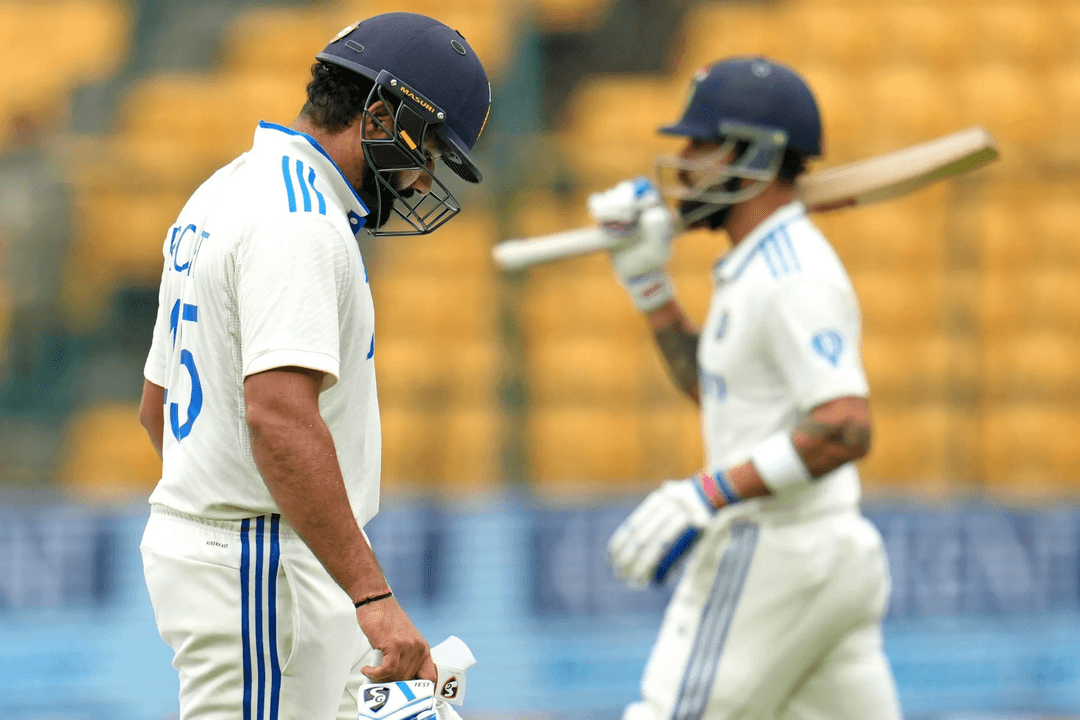
India's recent series was marked by a series of disheartening performances, including the record-setting low of just 46 runs in Test cricket. Compounding their struggles, the team faltered in the fourth innings, failing to chase down a target of 155 runs, ultimately leading to a humiliating whitewash. This series highlighted the significant shortcomings in India's strategy, leaving fans and analysts alike questioning the effectiveness of their approach as they look to rebuild for future challenges.
Navigating the Challenges of the Pitch
India faced a straightforward pitch in Bangalore, known for being quite flat and favorable for batting. However, to everyone’s surprise, rain altered the conditions in a way that neither captain anticipated. Rohit Sharma won the toss and decided to bat first, despite Tom Latham also expressing his preference to bat. On Day 2, the overcast conditions caught everyone off guard, and New Zealand capitalized on this, bowling India out for just 46 runs.
Following the innings, the typical Bangalore pitch revealed itself, making batting considerably easier. New Zealand took a substantial lead, and although India staged a magnificent comeback, it wasn’t sufficient as the Kiwis chased down the target with ease, handing India a defeat at home. In this test match, India should have taken the heavy rain the previous night into account, especially on Day 2. If the Indian batting lineup had been able to withstand the first session, things might have turned out differently. The technique against the Kiwi pacers has historically posed problems for India, and this match was no exception. It was no surprise, given the poor performance of the Indian batting in the first innings, that defeat was imminent, despite some optimism about India producing a better result.
As we moved on to the second and third tests in Pune and Mumbai, the pitches were rank turners where the ball stayed low with soft bounce, giving complete advantage to the spinners from Day 1. New Zealand batted first and displayed impressive resilience from the outset, managing to lose wickets at intervals but maintaining solid defensive techniques.
In contrast, India struggled significantly. The Indian players found it difficult to tackle the spin attack, which led to a disappointing performance. The New Zealand batters, having prepared well after their losses in Sri Lanka, took their time to settle in, and once comfortable, they continuously scored runs, surprising the Indian bowlers. This indicated a failure on the part of the Indian players, who didn’t anticipate such a formidable spin attack from the Kiwis. Their approach was lacking, and they failed to execute the basics properly.
Shuffling the batting order in search of a left-right combination led to chaos, resulting in an inability to gain a lead in the first innings. Despite losing the second test, India had another pitch with similar conditions to recover from the loss, but they still struggled. Ultimately, India failed to handle the home conditions as effectively as the New Zealand batters did.
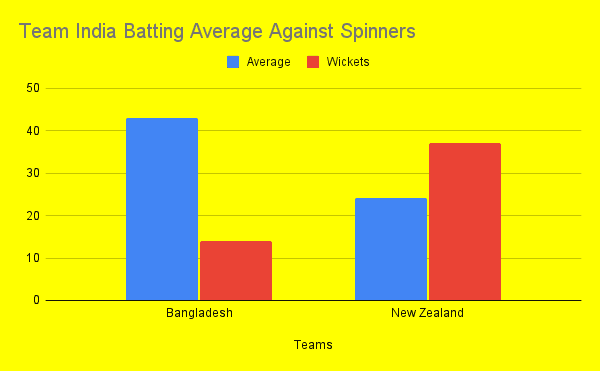
The chart clearly illustrates how Team India, despite having a nearly identical lineup, struggled against the quality spinners on a turning pitch. The significant drop in their batting average was particularly detrimental. Indian players were once known for their ability to counterspin, and they had effectively mastered the basics, especially when facing spinners by blocking them well and not allowing the bowlers to settle into a rhythm. This approach was successful against Bangladesh, but against New Zealand, they were unable to effectively counter the spin attack. In essence, what India did to Bangladesh, New Zealand managed to do to India. New Zealand executed their tactics well and launched a counter-attack to unsettle India's key spinners.