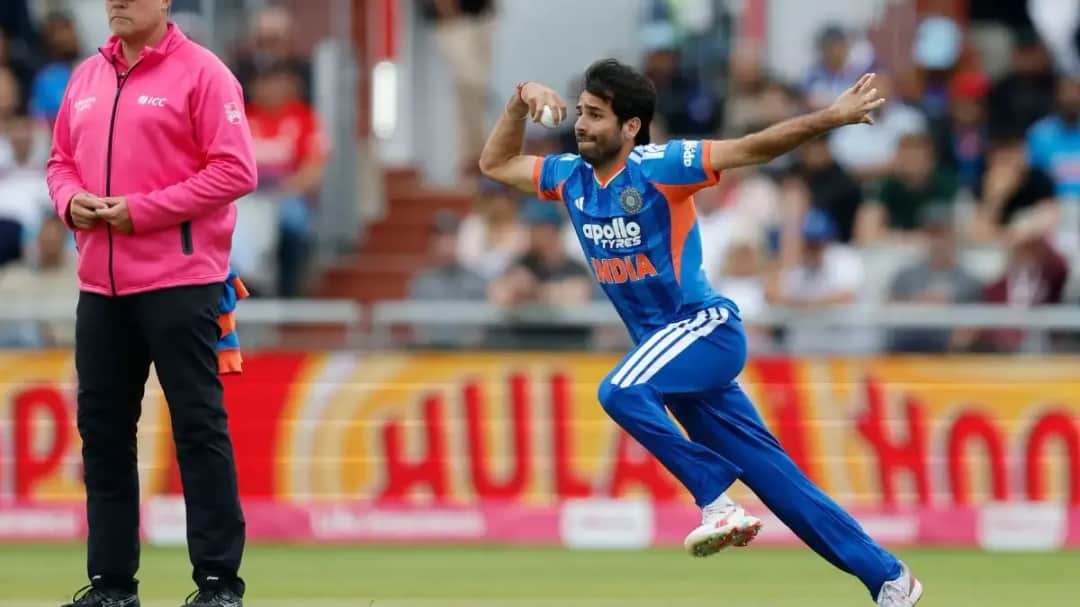
Ravi Bishnoi endured a night to forget in the second T20I against England in Manchester. The leg-spinner conceded 29 runs in the final over, allowing England to snatch victory and take the lead in the series. Following the defeat, Shreyas Iyer admitted that the final over proved to be the turning point of the contest.
While Bishnoi has understandably come under heavy scrutiny, is it fair to hold him solely responsible for India's defeat?
Ravi Bishnoi's Recent Struggles Continue
There is no denying that Bishnoi has struggled to replicate the form that once made him the No. 1-ranked T20I bowler in the world. In recent matches, his bowling has become increasingly predictable, particularly during the death overs.
His frequent reliance on the googly has allowed batters to anticipate his variations, while his inability to consistently hit the right lengths has only added to his problems. Against England, those flaws were exposed at the worst possible moment.
Did India's Team Selection Backfire?
However, the defeat cannot be pinned entirely on Bishnoi. India opted to play three spinners on a Manchester surface that offered very little assistance to spin. The decision appeared to be based on previous matches at the venue, where spinners had found success, especially while defending totals.
This time, however, the conditions were completely different. As a result, India entered the match one fast bowler short, leaving the attack without enough pace options during the crucial stages of England's chase.
With England taking the lead in the series, questions will now be raised not only about Ravi Bishnoi's place in the playing XI but also about India's tactical approach and team selection.
The spotlight may be on Bishnoi, but the bigger picture suggests this defeat was a collective failure rather than the fault of one player alone.
For More Updates on England vs India T20 series